|
| Day 13 was the last day for us to explore Tokyo, thank goodness the weather remained good and lovely as we rode out from Oak Hotel. Our first destination of the day was Sensoji Temple. |
 |
| After 3km of cycling we reached the the neighbourhood of Asakusa and here we were at a timber boarded lane filled with shopping arcades. It is covered and we found ourselves an eatery shop for our breakfast at the end of the street. Most of the shops were closed as it was still early in the morning. |
 |
| Noodle soup with tempura toppings like prawns, fish and vegetable. The guy next to us slurped his noodle so loud like nothing was happening, guess he must have enjoyed his noodle very much. |
 |
| Sensoji (浅草寺, Sensōji, also known as Asakusa Kannon Temple) is a Buddhist temple. It is one of Tokyo's most colorful and popular temples. |
 |
| Many tourists, both Japanese and from abroad, visit Sensō-ji every year. Catering to the visiting crowds, the surrounding area has many traditional shops and eating places that feature traditional dishes. |
 |
| There were many people praying and drinking holy water in the temple. |
 |
| The Five-storied Pagoda was built in 942 along with the Main Hall by military commander Taira no Kinmasa. Along with the other buildings, it has been successively lost to fire and subsequently reconstructed. |
 |
| This street of about 200 metres long is called Nakamise that leads from the outer gate to the temple. You can get all kind of Japanese souvenirs and traditional local snacks. The shopping street has a history of several centuries. |
 |
| From the temple we slowly rolled down south to Ueno Park passing by the Ueno Station and Keisei Ueno Station. |
 |
| Little did I know about Ueno Park and to my surprise is a huge park in deed. Sorry I have under estimated its grandness. Ueno Park is another awesome place in spring for its cherry blossoms and hanami. |
 |
| Ueno Park (上野公園) is a spacious public park in the Ueno district of Taitō, Tokyo. The park was established in 1873 on lands formerly belonging to the temple of Kan'ei-ji. |
 |
| The home of a number of major museums, In recent times the park and its attractions have drawn over ten million visitors a year, making it Japan's most popular city park. |
 |
The shining golden shrine, Toshogu Shrine main gate.
Apparently, it took 6 years to restore this shrine with hundred of thousand of gold leaves to shine this place and it's now reopened. |
 |
| Kan'ei-ji pagoda stands inside the Ueno Park Zoo. The pagoda has gone through wars but have survived and it is now standing proudly at a bustling neighborhood. |
 |
| The Tokyo National Museum (東京国立博物館) established in 1872, is the oldest Japanese national museum and the largest art museum in Japan. |
 |
| The massive train lines seen from a pedestrian bridge while we were crossing from one side to another. |
 |
| It is a rare sight in a Japanese city but it does exist like everywhere. This homeless was seen at Ueno Station. |
Ueno Station (上野駅) is a major railway station in Tokyo's Taitō. It is the station used to reach the Ueno district and Ueno Park. A major commuter hub, it is also the traditional terminus for long-distance trains from northern Japan, although with the extension of the Shinkansen lines to Tokyo Station this role has diminished in recent years.
 |
| From Ueno Park we packed our bikes and boarded a train to Shinjuku Station. This is a long travellator and it keeps on moving like no end to it ..... |
 |
| It was a Saturday in a commercial area where the people were out in the public enjoying the weather and kind of having a picnic out there. |
 |
| Dwelling in an Asian modern city with our bicycles. |
 |
| Shinjuku (新宿区) located in Tokyo Metropolis. It is a major commercial and administrative centre, housing the busiest train station in the world (Shinjuku Station) and the Tokyo Metropolitan Government Building, the administration centre for the government of Tokyo. As of 2008, the ward has an estimated populationof 312,418 and a population density of 17,140 people per km². The total area is 18.23 km². |
 |
| We headed towards Yoyogi area and went round hunting for food while seeking for our next destination. |
 |
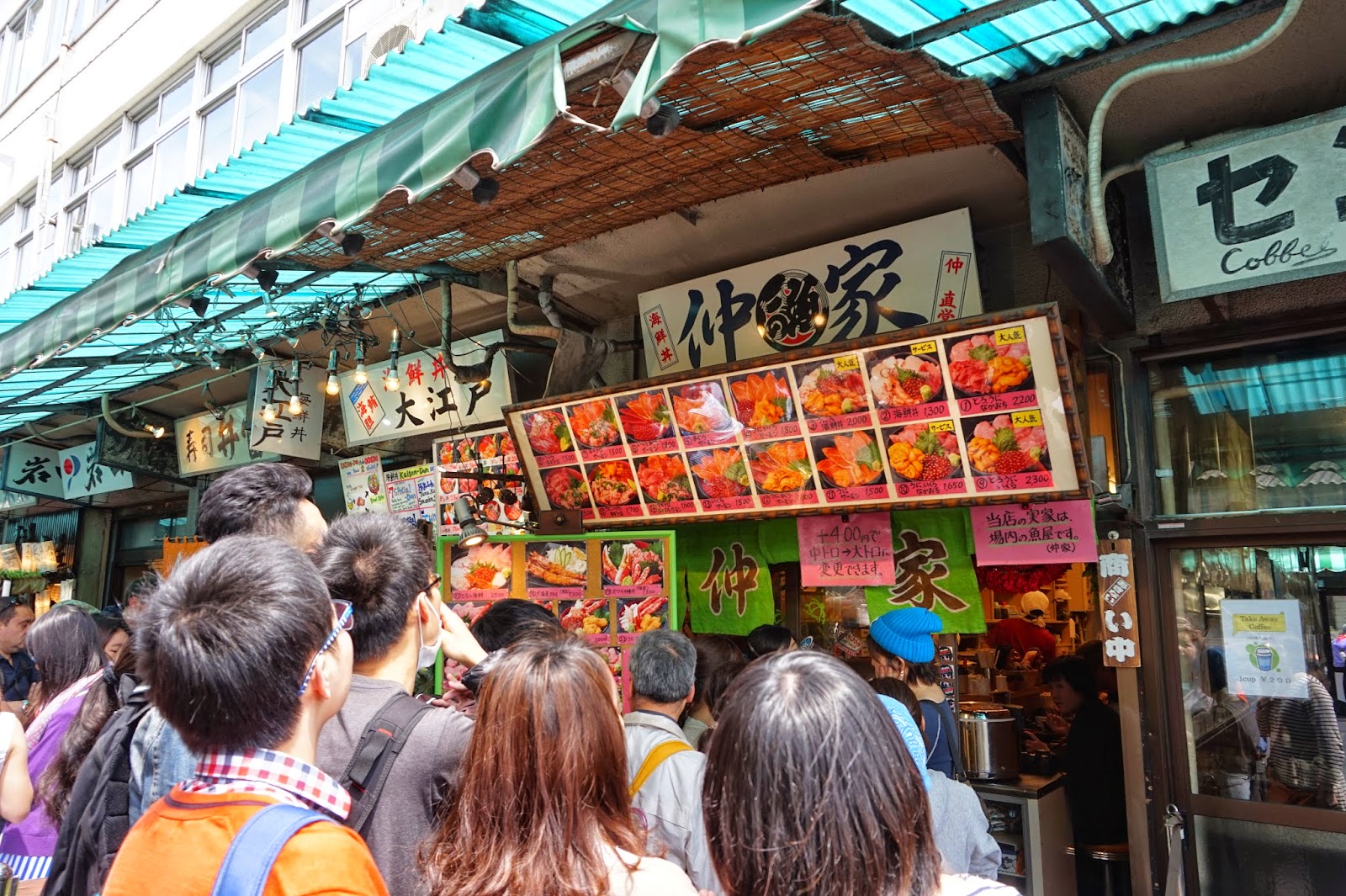
| A quiet shop with attractive posters outside and it was tempting as my stomach was growling. |
I love these dishes they were good and relatively cheap...yummy yummy...
 |
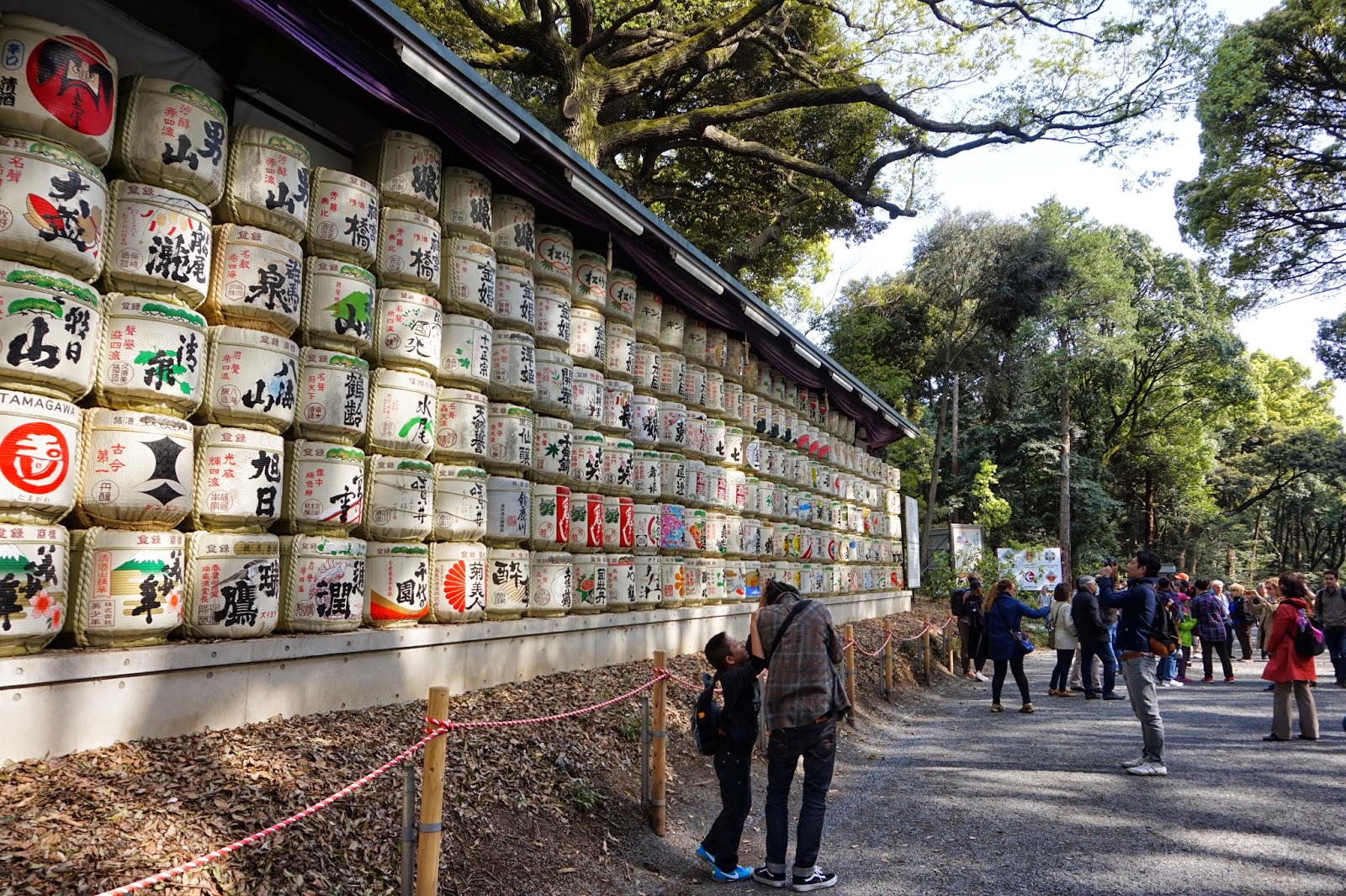
| Meiji Shrine (明治神宮) is a shrine dedicated to the deified spirits of Emperor Meiji and his consort, Empress Shoken. Located just beside the JR Yamanote Line's busy Harajuku Station, Meiji Shrine and the adjacent Yoyogi Park make up a large forested area within the densely built-up city. The spacious shrine grounds offer walking paths that are great for a relaxing stroll. |
Barrels of sake and French wines facing one another and that was a lot of alcohol in a shrine.
 |
| Harajuku is known internationally as a center of Japanese youth culture and fashion. Shopping and dining options include many small, youth oriented, independent boutiques and cafés. |
 |
| The street was so packed, movement was on an inch by inch mode and slowly we inched out. |
 |
| At last we emerged from Takeshita Dori which is a narrow pedestrian only street packed with young fashionable people and lined with fashion boutiques and cafes. |
 |
| Harajuku has been the epicentre of Tokyo teen fashion for decades, and it's still nurturing unorthodox styles. |
 |
| Just at the entrance gate I was impressed with this cyclist and managed to get some info on him his name is Masahiro Takematsu, 51. A drummer, professional cyclist and photographer. He performs and sells his CDs at the park. |
 |
| I was very happy to find this place it has been in my mind since the last time I came here on a Sunday (some thirty over years ago) and the atmosphere of rock and roll has always been there for me. It's grease lightning time. |
 |
| Unfortunately I did not manage to see any rockers most probably it was a Saturday. Things could be different if it was a Sunday. |
The were lot of youths practicing for their Sunday performances. On Sunday mornings, Japanese youth gather to show off Gothic Lolita, cosplay, rockabilly, visual-kei, and other creative fashions.
 |
| Bye bye Yoyogi Park see next time. |
 |
| Shibuya is famous for its scramble crossing. It is located in front of the Shibuya Station Hachikō exit and stops vehicles in all directions to allow pedestrians to inundate the entire intersection. The statue of Hachikō, a dog, between the station and the intersection, is a common meeting place and almost always crowded. |
 |
| Shibuya Station (渋谷駅) with 2.4 million passengers on an average weekday in 2004, it is the fourth-busiest commuter rail station in Japan (after Shinjuku, Ikebukuro, and Ōsaka /Umeda) handling a large amount of commuter traffic between the center city and suburbs to the south and west |
 |
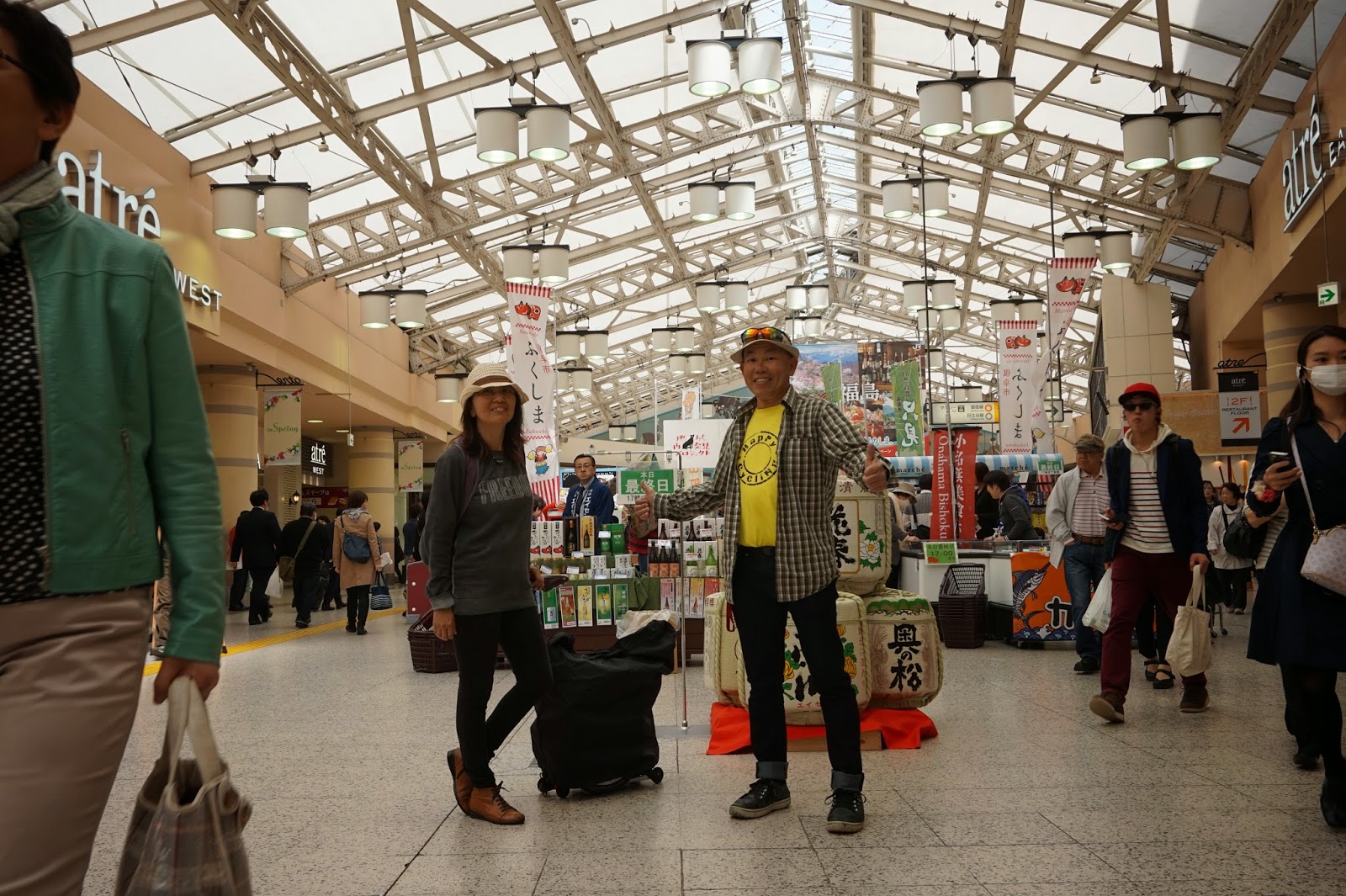
| We finally arrived at the last station at Ueno and moment later I was glad to see a group of foldies entering the train station, wondering where were they from? |
My crazy craving for ramen did not stop me from having another one before I leave Tokyo.
 |
| That was our last night in Tokyo and tomorrow we will be leaving Japan for home. Good night and we hope to visit the place again. |